Every organization grows on the strength of its people. To drive that growth, HR teams must do more than hire and manage payroll. They need a well-defined HR strategy that aligns employee performance, workplace culture, and business goals. With rapidly changing work models and talent demands, strategic HR is no longer optional; it has become a core business function.
What Is an HR Strategy?
An HR strategy is a structured framework that organizes workforce activities such as hiring, development, performance management, compensation, and employee experience to support overall company objectives. In simple terms, it is a plan that ensures employees and business goals move in the same direction.
HR strategies generally fall into two categories:
- Organizational/Overarching Strategy: A broader plan for managing the entire workforce.
- Specific Strategy: Focused strategies for key areas like recruitment, learning, performance, or benefits.
Modern HR strategies must emphasize agility, employee experience, and data-driven decision making. Studies prove that businesses with a strong people-centric strategy outperform competitors significantly.
Why Is HR Strategy Important?
A well-developed HR approach ensures that employees are aligned with company goals, supported with growth opportunities, and empowered with a productive environment. It delivers value in the following ways:
- Attracting and retaining capable talent
- Improving productivity and engagement
- Maintaining legal compliance and governance
- Developing skills and leadership pipelines
- Enhancing company culture and employer reputation
- Managing workforce costs effectively
Core Elements of an Effective HR Strategy
- Workforce Planning & Staffing
Planning talent needs, balancing workloads, and ensuring the right people are in the right roles. - Recruitment & Talent Acquisition
Creating structured hiring practices, candidate evaluation standards, and systems to improve quality of hire and reduce time-to-hire. - Employee Development & Learning
Continuous training across roles to increase innovation, performance, and skill depth rather than one-time programs. - Performance Management & Evaluation
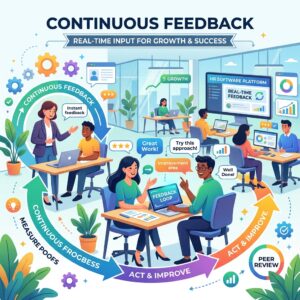
Defining measurable goals, delivering ongoing feedback, running appraisals, and improving skills through coaching and recognition. - Compensation & Benefits Framework
Designing fair pay, incentive models, and employee benefits that strengthen retention and motivate performance. - Engagement & Retention Initiatives
Boosting employee well-being, recognition programs, surveys, career paths, and culture-building actions that reduce attrition. - Succession Planning & Leadership Growth
Building future leaders, assessing skill gaps, and preparing employees for long-term organizational needs.
How to Create an HR Strategy
To design an HR strategy that drives business growth, HR teams must:
- Define the target division or business unit that the strategy will support.
- Analyze industry trends affecting talent, technology, and work culture.
- Conduct a gap assessment to compare current capabilities with future needs.
- Identify key strengths and weaknesses in skills, processes, and workforce planning.
- Design core HR processes such as onboarding, training, performance cycles, or benefits.
- Create an action plan with timelines, responsibilities, and measurable outcomes.
- Evaluate results using KPIs such as turnover, productivity, hiring quality, cost metrics, and employee feedback.
Executing an HR Strategy Effectively
- Break broad goals into clear HR action plans.
- Assign ownership and accountability for each process.
- Use data-driven metrics to measure workforce performance.
- Set deadlines and adapt strategies based on outcomes.
- Leverage HR technology to streamline execution.
Benefits of Strategic HR Planning
- Reduced turnover and higher retention
- Improved engagement and productivity
- Better workforce forecasting and planning
- Higher quality hiring and training outcomes
- Controlled HR expenses and fewer disruptions
Build a Strong HR Strategy with Peoplo
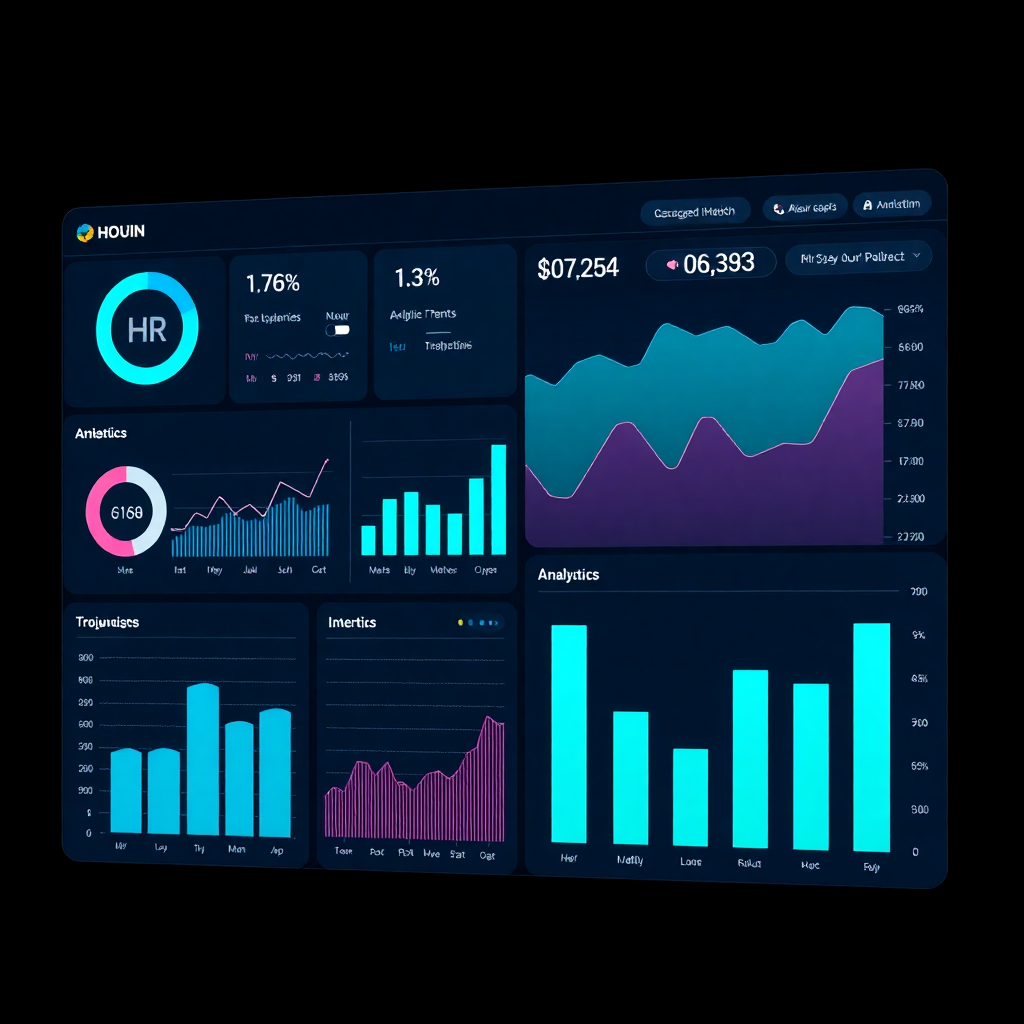
A successful HR strategy requires automation, reliable data, and streamlined workflows. Peoplo consolidates hiring, onboarding, payroll, attendance, analytics, and performance management into one intuitive platform, helping businesses build agile and future-ready teams.
Transform HR Operations with Peoplo
Conclusion
An effective HR strategy is not just documentation; it is a people-focused business roadmap. When companies align HR decisions with long-term goals, invest in employee development, embrace data insights, and adopt modern HR technology, they build a resilient and growth-driven workforce. A strategic HR approach ensures that employees thrive, innovation expands, and business goals accelerate.