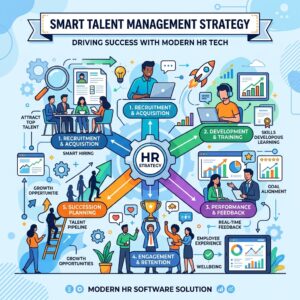
Organizations with strong HRM foundations consistently achieve better performance and create long-term competitive advantage. When HR practices are implemented thoughtfully, companies experience better engagement, stronger retention, and a workplace culture built on trust and growth. HRM covers essential areas such as manpower planning, talent hiring, development, performance supervision, and ethical workforce management.
What Is HRM?
Human Resource Management (HRM) refers to the strategic and structured management of an organization’s workforce. It includes the processes of acquiring talent, nurturing employee growth, managing workplace relationships, and ensuring compliance with organizational and legal standards. The goal is to build a skilled, motivated, and aligned workforce that drives business success.
Many HR leaders describe HRM as the “central support system of every future-ready organization,” as it links business goals with employee capabilities and workplace development.
9 Characteristics of HRM
Although HRM practices may differ across industries, the following nine characteristics remain fundamental for most organizations.
1. Embracing Workforce Diversity
HRM encourages a workplace environment that values diverse skills, experiences, and backgrounds. By acknowledging and utilizing individual strengths, HR leaders help employees feel included and respected.
2. Strategic Alignment
HRM synchronizes people-oriented initiatives with long-term organizational objectives. HR professionals contribute to strategic decisions, provide insights on talent planning, and help shape a productive and cohesive culture.
3. Fostering Employee Commitment
A key role of HRM is to build trust and loyalty within the workforce. This includes cultivating transparency, accountability, and open communication, while promoting a positive and supportive workplace.
4. Mutual Growth and Benefit
HRM ensures that both employees and the organization benefit equally. Employees receive opportunities for advancement, while the company gains a capable and driven workforce.
5. Balancing Organizational Perspectives
HRM balances the unified goals of the organization with the varied expectations of employees, managers, and stakeholders. This balance improves communication, teamwork, and fair conflict resolution.
6. Valuing Human Capital
Employees are viewed as assets who drive growth. HRM focuses on attracting, training, mentoring, and retaining talent to support long-term business objectives and operational excellence.
7. Alignment With Organizational Values
HRM reinforces the company’s mission, vision, and ethics. Practices are shaped around principles such as fairness, integrity, and responsibility, ensuring the workforce operates within legal and ethical boundaries.
8. Harmonizing Individual and Organizational Outcomes
HRM aims to achieve strong organizational performance while supporting employee well-being and satisfaction. This harmony results in better productivity, reduced turnover, and a healthier work environment.
9. Integrated HR System
HRM brings together hiring, training, policy design, and workforce operations into a structured system. It enables HR teams to actively participate in business decisions while ensuring efficient daily operations.
How HRM Strengthens Organizations
Enhancing Employee Capabilities
By promoting diversity and skill development, HRM helps generate innovative ideas and strengthens an organization’s problem-solving abilities.
Improving Business Performance
Linking HR strategies with business goals results in higher productivity, optimized workflows, and long-term organizational sustainability.
Boosting Employee Engagement
Effective HRM practices nurture trust and loyalty, contributing to higher retention levels and stronger employee commitment.
Building a Strong Organizational Culture
HRM promotes core values such as integrity and inclusiveness, shaping a culture that supports high performance and ethical behavior.
Creating an Integrated Work System
When HR processes align with business operations, organizations can automate routine tasks, enabling HR teams to focus on strategic decision-making.
Conclusion
Strong HRM practices are essential for building a productive and future-ready workforce. By embracing the core characteristics of HRM, organizations can create an environment that supports growth, boosts performance, and sustains long-term success. In a rapidly evolving business landscape, HRM remains one of the most influential pillars for driving organizational excellence.