Talent management isn’t something that starts only when a job opening is announced — it begins long before recruitment. Many organizations unintentionally overlook capable individuals due to limited sourcing, biased hiring patterns, and a lack of focus on nurturing employees already within the company.
Depending solely on specific hiring channels, ignoring internal candidates, or failing to identify upcoming skill requirements can restrict access to strong talent. Removing these barriers not only minimizes bias but also helps build a wider, more diverse talent pipeline.
Below are common areas where organizations miss out on potential high-value talent:
1. Internal Mobility
Many HR teams overlook existing employees who already understand the business and possess untapped potential. To maximize internal mobility, HR should:
- Regularly evaluate current employee skills
- Promote internal job opportunities transparently
- Support structured learning and growth programs
Internal hiring strengthens retention, reduces cost per hire, and boosts employee morale.
2. Lack of Skill Mapping for Future Roles
If HR teams do not understand how a role will evolve and what skills it will demand in the future, how can they objectively evaluate the right candidate?
Skill mapping aligns present capabilities with future business needs, ensuring organizations invest in people who are ready to grow with the company.
3. DEI and Hiring Bias
Without a strong emphasis on Diversity, Equity, and Inclusion (DEI), companies limit themselves to a narrow talent pool. Unconscious bias in screening, interviews, or sourcing platforms may exclude highly competent applicants who could enhance organizational innovation and culture.
4. Succession Planning
Without a systematic succession plan, organizations fail to identify future leaders within their workforce. This leads to rushed external hiring and missed opportunities to promote loyal employees who already align with business values and expectations.
5. Lack of Skill Development
Ignoring learning and development creates stagnant roles and unprepared talent. Consistent training empowers employees to grow into new responsibilities instead of being passed over for external candidates, which saves cost and strengthens internal expertise.
A truly effective talent strategy does not stop at hiring; it continuously asks — “How can we optimize and elevate our talent ecosystem?” Constant evaluation ensures HR remains aligned with business goals and workforce shifts.
Talent Management Model: Align, Engage & Enable
An intelligent talent management strategy revolves around three core principles: Align, Engage, and Enable. Each plays a crucial role in building a workforce that is motivated, capable, and future-ready.
Align
Aligning talent ensures employees are placed in roles that suit their strengths while also supporting organizational objectives. It’s the foundation of meaningful contribution and growth.
Engage
Engagement builds emotional connection between employees and the company’s mission. Employees stay invested when they feel valued, supported, and recognized.
Enable
Enablement equips employees with tools, mentorship, and learning opportunities to perform their roles effectively and advance professionally.
Talent Alignment: Strategic Talent Integration
Strategic alignment ensures employees are matched with roles where they can deliver maximum impact. It requires thoughtful planning to identify skill sets, business needs, and growth trajectories while nurturing an environment for long-term success.
- Talent Acquisition: Hire individuals who not only fit technical requirements but also align with cultural and organizational vision.
- Onboarding & Integration: Equip new hires with clarity, role expectations, and accessible support systems.
- Performance Management: Maintain consistency through clear goals and continuous feedback cycles.
- Career Development: Create advancement paths that connect employee aspirations to business outcomes.
- Compensation & Rewards: Motivate talent with fair and growth-oriented compensation systems.
- Talent Strategy & Forecasting: Adapt workforce planning proactively based on market trends and expected business shifts.
Avoid issues like: no long-term planning, weak change management, lack of forecasting, and misaligned workforce strategies.
Talent Engagement: Boosting Employee Involvement
True engagement goes beyond perks and activities — it creates belonging, purpose, and professional excitement. Employees who feel connected to their work actively contribute to organizational growth.
- Employee Engagement: Build purpose-driven work and implement feedback-focused action plans.
- Learning & Development: Offer leadership training, cross-skilling, and learning paths.
- Talent Retention: Create value through recognition, clarity, stable career paths, and leadership accessibility.
- DEI Practices: Promote fair opportunities, respect diverse perspectives, and build inclusive collaboration.
- Employee Relations: Establish conflict-resolution frameworks and compliance-based systems to protect employees.
Talent Enablement: Enhancing Capability & Experience
Talent enablement empowers employees with the infrastructure, environment, and resources they need to succeed. It ensures talent is not only engaged but also equipped to perform and advance.
- Workplace Ergonomics: Provide healthy, supportive work environments and tools that simplify productivity.
- Modern HR Technology: Platforms like Peoplo.io streamline feedback, attendance, analytics, learning, and engagement.
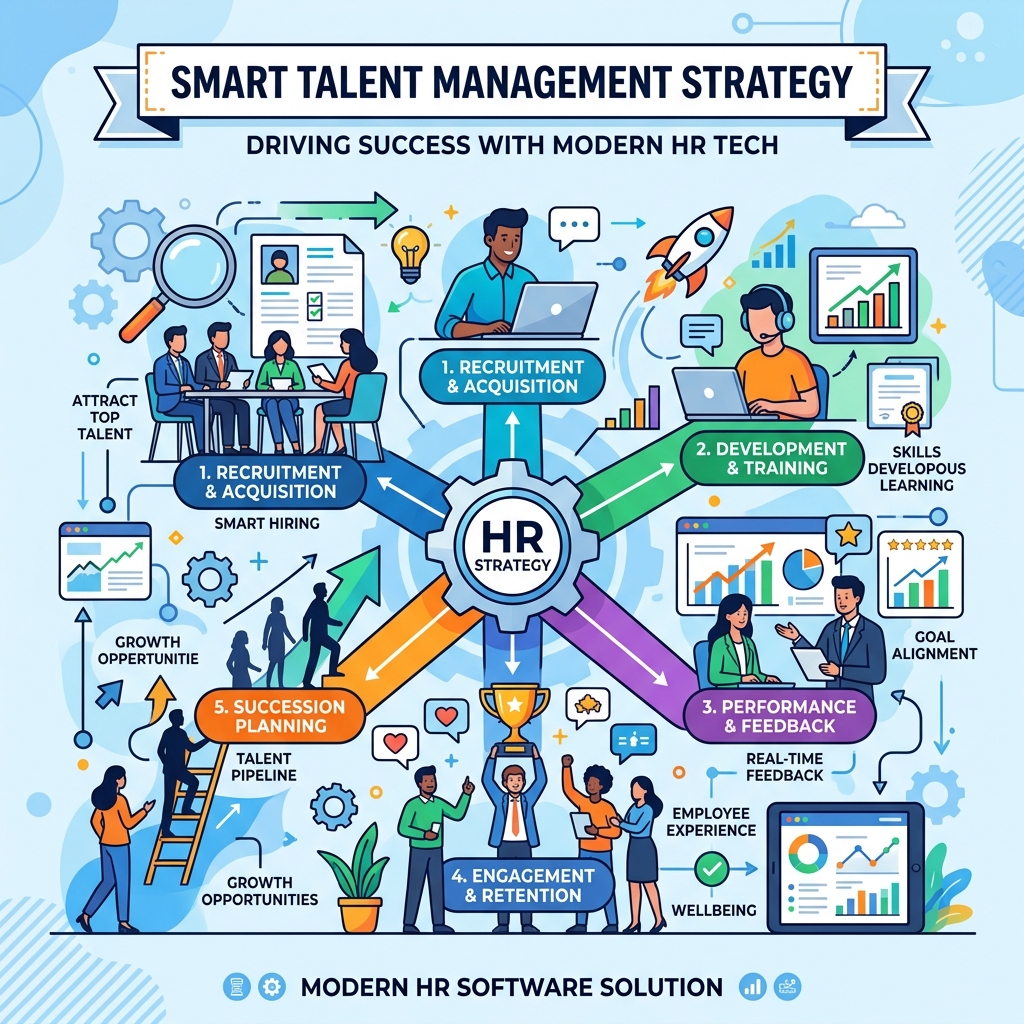
- Talent Analytics: Real-time insights help HR diagnose trends, forecast skill demands, and optimize workforce decisions.
Without analytics and forecasting, organizations risk slow decisions, skill gaps, and ineffective hiring strategies.
Transforming Talent Management with HR Tech
HR technology empowers businesses to automate operations, understand workforce behavior, and build stronger employee experiences. With Peoplo.io, companies can:
- Automate day-to-day HR tasks
- Predict workforce trends using analytics
- Enhance employee engagement and productivity
- Build a talent pipeline aligned with business goals
Future-focused talent management isn’t just about hiring employees — it’s about nurturing people who grow with your organization.